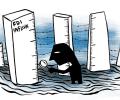
The Union Cabinet on Thursday approved a proposal to allow 100 per cent foreign direct investment (FDI) in public sector refiners, expanding the scope for FDI in the privatisation of Bharat Petroleum Corporation Ltd (BPCL). The approval by the Cabinet will enable the sale of the government's 52.98 per cent stake in BPCL to a foreign buyer, and, at the same time, will open the door for FDI in other public sector companies in the oil sector put up for privatisation.
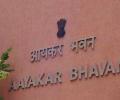
Amid economic uncertainties owing to the pandemic, the government's key revenue agency, the Income Tax Department, has close to 400 vacancies at commissioner level and above, affecting its functioning. Seventy-three of the 91 chief commissioner positions are lying vacant, with some for more than a year. Chief commissioner is the second-highest post in the department, below principal chief commissioner, which is at par with secretary in a ministry.
India conceding ground to bring only top 100 digital companies like Google, Facebook, and Netflix into the global taxation pact may have revenue implications. This will mean that New Delhi will have to withdraw the contentious 2 per cent equalisation levy on e-commerce operators by 2023. This may have revenue implications for India, experts pointed out, as the equalisation levy has a much lower annual revenue threshold of Rs 2 crore (euro 0.2 million) as against euro 20 billion agreed by 130 countries at the Organization for Economic Cooperation and Development (OECD). India, along with other developing countries, was pitching for at least euro 1 billion threshold to cover at least 5,000 global entities. India collected Rs 2,057 crore from the equalisation levy in 2020-21, an 85 per cent growth over Rs 1,136 crore in the previous fiscal.
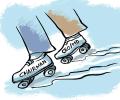
Recovery from the second wave of the pandemic in April-May is expected to be swifter as compared to the first wave in 2020, according to the Confederation of Indian Industries (CII) chief executive officers (CEOs) poll of 119 top corporate. During the second wave, the lockdowns were largely designed to limit social gatherings and impact on economic activities was restricted. This helped arrest the impact of the second wave on economic growth, according to a survey conducted by the industry lobby group Confederation of Indian Industries (CII). About 59 per cent of the CEOs polled expect the recovery in sales to be better than in the first wave for their companies, while 46 per cent of them expressed a similar trend for their respective industry sectors.

'From the tiniest to mid-level organisations and even some at the lower end of the large-scale ones would say that computerisation and the extensive documentation and regulatory requirements for GST have made the compliance process worse in many cases.'

Infosys chairman and Aadhaar architect Nandan Nilekani will join a panel set up by the central government, along with eight other members, to advise the government on designing and accelerating adoption of Open Network for Digital Commerce (ONDC), aimed at curbing digital monopolies. The larger idea is to give 'free and fair' choice to consumers to buy products on an online platform, a senior government official said.
The Centre has slapped as many as 148 notices on e-commerce players in the past three months for not complying with the mandatory display of the 'country of origin' tag on products sold. "Of the 148 notices, 56 have compounded it (the offence) and paid up around Rs 34 lakh," a senior official told Business Standard. "Every product has to display the country of origin, along with other basic information," the official added. In the case of e-commerce companies, these details have to be clearly displayed on their portals.
'I'll give it to the vaccine manufacturers without guarantees, take the payment in advance and give me the supplies.' 'The moment you give me one lot of supply, I'll give you more.'


The vacancies are learnt to be impacting the I-T department's day-to-day functioning.

GST mop-up likely to fall in May, June after touching record levels in April and March.

The trade to-and-from India so far is not affected. But if the situation continues to remain the same for the next two to three months, it could definitely hurt India trade, including essential cargo.

'Supplies should start moving to the Serum Institute without any impediments.'

E-way bill generation, which is related to paying Goods and Services Tax (GST) and a key high-frequency indicator of economic activity, may have fallen to a five-month low in April as more cities experience lockdowns due to a surge in Covid-19 cases. In April e-way bill generation may decline to 55-58 million, which is the lowest since at least November. On the higher side, it is a 17 per cent decline over March.

US proposal to raise the global corporate tax rate to 28% from 21% might face resistance from countries unwilling to give up their edge and compete with America on its terms.

The group has called for a retaliatory tariff action against India, if New Delhi does not roll back the 'unilateral and discriminatory' equalisation levy or Google Tax.

Recently, the finance ministry waived off basic customs duty and health cess on imported oxygen and related equipment for three years.

They say that a stimulus package may not be necessary because, unlike last year's total lockdown, public transport, including the railways and airlines, is running and the restrictions on movement are localised and, in some cases, are partial rather than total.
This will be an upfront payment for the vaccine doses that these two companies will supply to the government.

'Personal income tax collections have been high on account of impressive advance tax mop-up.'
 © 2026 Rediff.com - Investor Information - Advertise with us - Disclaimer - Privacy Policy - Sitemap - Feedback - About us - Terms of use - Grievances